
First Time in Zakopane - Complete Guide
Where Zakopane is, how long to stay, how to get there and around, what to pack, and where to find the details for everything else.
Published
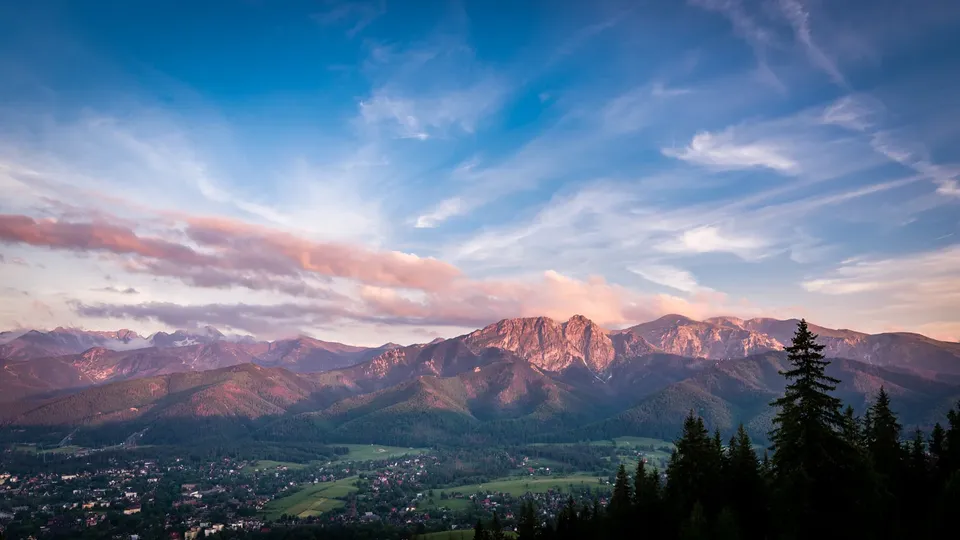
Zakopane is a mountain town in the far south of Poland, at the foot of the Tatra Mountains and close to the border with Slovakia. It is the country's best-known mountain resort: busy in winter for the snow and in summer for the trails, with wooden highlander houses, a lively main street and the peaks of the Tatra National Park rising right behind the town. This page gives you the overview. Each section links to a detailed guide.
Where Zakopane is
The town lies about 100 km south of Kraków, at roughly 800 to 1,000 metres above sea level. Kraków is the nearest large city and has the nearest international airport. The Tatras above the town are protected as a national park, which is why so much of the area stays green and quiet only a short walk from the centre.
How many days to stay
- 2 to 3 days: enough for the town centre, a cable car or funicular to a viewpoint, an easy valley walk and an evening at the thermal baths.
- 4 to 5 days: time for a longer walk (for example to a mountain lake), a rest day, and a buffer for bad weather.
- A week or more: good for families, for skiing, or for a slower stay with day trips around the region.
Mountain weather can cancel plans at short notice, so an extra day is worth more here than in a city.
Getting there
Most visitors fly into Kraków and continue by road. The drive usually takes about two hours, and longer at weekends and in peak season, when the single main road into the mountains gets busy. You can book a private transfer, take a bus, rent a car or take the train. Our guide How to Get to Zakopane compares every option, including from Katowice Airport.
Where to stay
The centre around the main pedestrian street is convenient if you want to walk to restaurants and shops, but it is also the noisiest part of town. Quieter areas on the slopes around the centre and the neighbouring villages suit families and anyone arriving by car, but check parking and how steep the access road is in winter. Large groups often prefer a whole chalet or apartment with several bedrooms.
Getting around
The centre is compact and walkable. Local buses and minibuses run to the valleys and trailheads, and taxis are easy to find. A car is useful for day trips, but parking in the centre is limited and paid. Read Driving & Parking in Zakopane before you decide.
Weather and what to wear
Zakopane is much cooler than the lowlands, and the peaks are colder still. Winters are snowy and cold; summers are pleasant but often bring afternoon thunderstorms. Dress in layers, bring a waterproof jacket in every season, and wear shoes with a proper grip. The month-by-month guide Zakopane Weather & What to Wear tells you what to pack, and Best Time to Visit Zakopane helps you choose the season.
Food and halal
Local highlander cooking is hearty and often based on pork, lamb, cheese and potatoes. You will also find international restaurants and cafes. If you eat halal, read Halal Food in Zakopane first: it explains what each label on our site means and what we verify.
Groceries and supermarkets
There are supermarkets and small grocery shops in and around the centre. Most shops in Poland are closed on most Sundays, so plan your shopping for Saturday. Details in Shopping & Groceries in Zakopane.
Things to do
- Ride up to a viewpoint by funicular or cable car for views over the Tatras.
- Walk one of the gentle valleys that start at the edge of town.
- Visit a mountain lake - some walks are long but on easy paths.
- Stroll the main street and the market for local cheese and crafts.
- In winter: skiing, sledging and snow walks.
Thermal baths
Several thermal pool complexes in and around Zakopane are fed by warm spring water. They are a good plan for a rainy day, for an evening after walking in the cold, and for children. Most have indoor and outdoor pools.
Travelling with children
Zakopane works well for families, from easy valley walks to snow fun and swimming. See Zakopane with Kids for ideas by age and for rainy days.
Parking
The centre has a paid parking zone and many private car parks. Popular trailheads have their own car parks, some of which fill up early in season. Ask your host whether parking is included at your accommodation.
Money, cards and cash
Poland uses the złoty (PLN), not the euro. Cards and contactless payments are widely accepted, but keep some cash for small stalls, mountain huts and public toilets. When a card terminal or ATM offers to charge you in your home currency, choose złoty - the conversion offered on the spot is usually worse.
Pharmacies and emergencies
Pharmacies are marked "Apteka". The general emergency number in Poland is 112. For accidents in the mountains, call the Tatra mountain rescue on 985 or +48 601 100 300. More in Practical Information for Your Stay.
A few words of Polish
Many people in tourism speak English, but a greeting in Polish is always welcome. Start with "Dzień dobry" (hello, said "jen DOH-bri") and "Dziękuję" (thank you, "jen-KOO-yeh"). More in Useful Polish Phrases for Travelers.